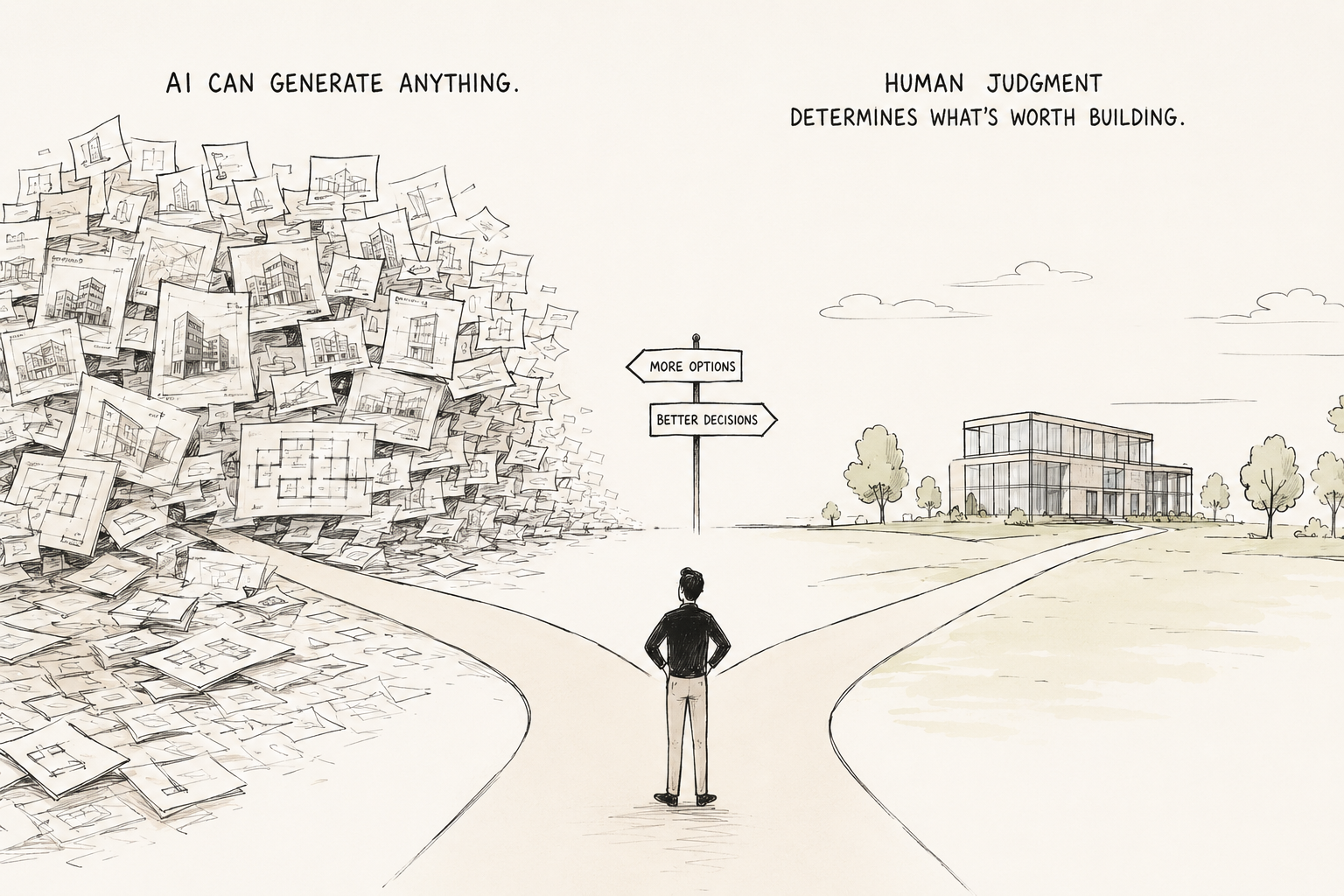
As AI makes it nearly effortless to generate endless possibilities, the harder problem becomes deciding what actually works. The next frontier of AI may be systems that can evaluate, optimize, and navigate complexity—while leaving humans to define what “better” means.

Buildings accumulate disconnected representations of themselves from the moment design begins — drawings, models, specifications, and field records that were never designed to stay in sync — and most of the built environment is operated, maintained, and traded against information that stopped matching physical reality the day construction began. The industry has built an entire economy of workflows to manage that drift, and the next significant shift in construction software is treating it as an infrastructure problem rather than a documentation one.
AI software costs scale in ways most construction firms haven't modeled yet. The tools doing plan review and compliance checks are mostly LLM-based, which means unpredictable costs and accuracy you can't audit. Buildable Engine is built differently: deterministic logic where it matters and "AI" only where it adds value.

Construction's management ranks have nearly doubled since 2005 — not because the industry needed more managers, but because broken software, regulatory complexity, and disconnected workflows created coordination gaps that got filled with people. The field isn't the problem. The upstream information failures are. The next productivity gain in construction comes from an intelligence layer that resolves those failures before anyone breaks ground.

Most construction losses don’t come from catastrophic failures—they come from small plan mistakes discovered too late, leading to delays, rework, squeezed margins, and damaged client trust. The cheapest moment to fix compliance and buildability issues is before permit submission, yet most builders still rely on manual review processes that miss costly problems under deadline pressure. The article argues that Buildable Engine’s “Buildability Intelligence” moves those checks upstream through automated plan audits, helping builders catch issues early, protect profit, and look more professional to clients.
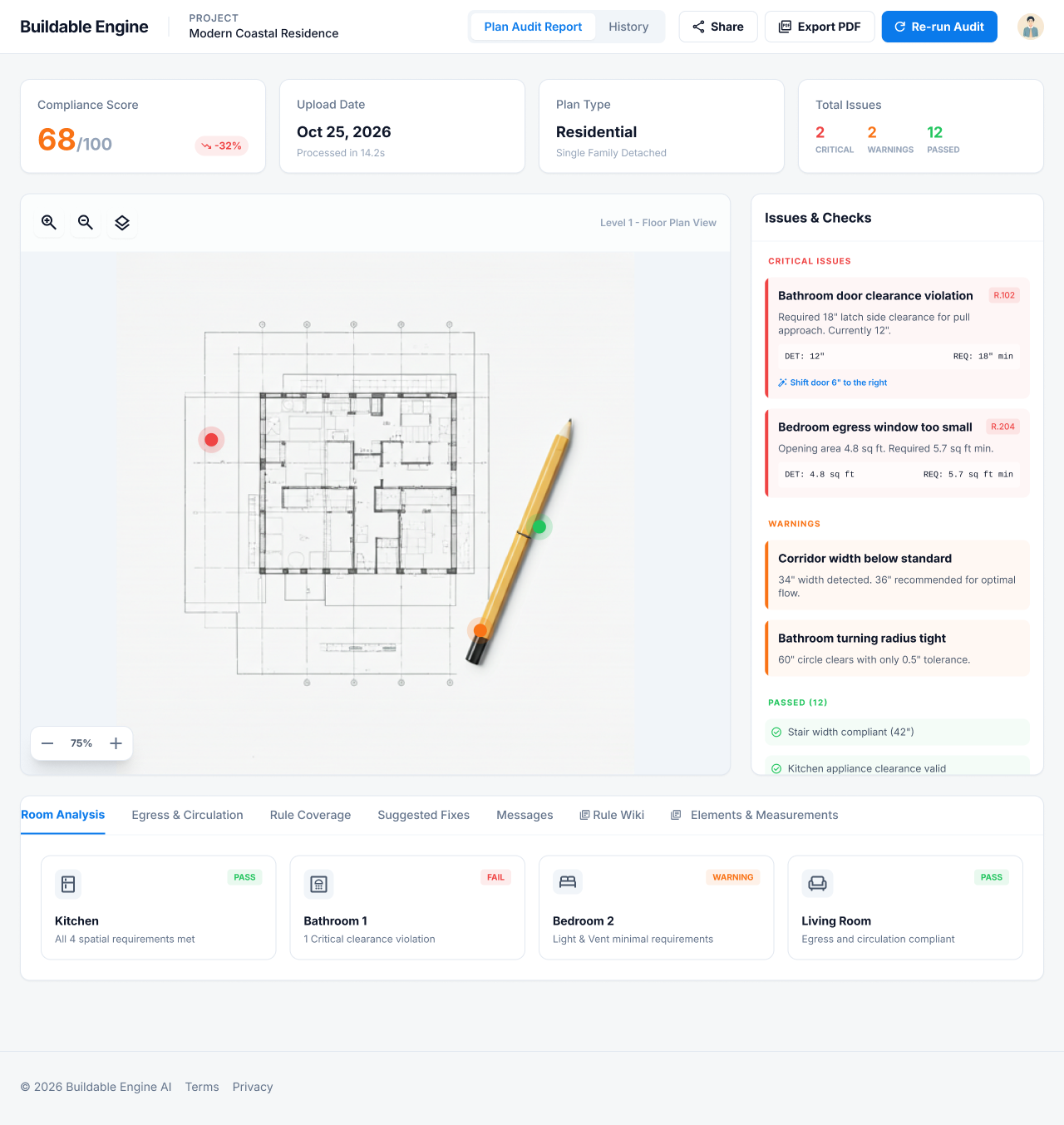
The construction industry has always had a name for what goes wrong between design and reality — RFIs, change orders, schedule float. Now it has a name for the layer that prevents it. Buildability Intelligence™ is a new category of applied AI that evaluates whether a designed object can actually be built, before a permit is filed or a foundation is poured.

The conversation about AI in architecture keeps asking the wrong question. It's not about replacement — it's about whether AI can meet the standard of accountability that professional work in the built world actually requires.
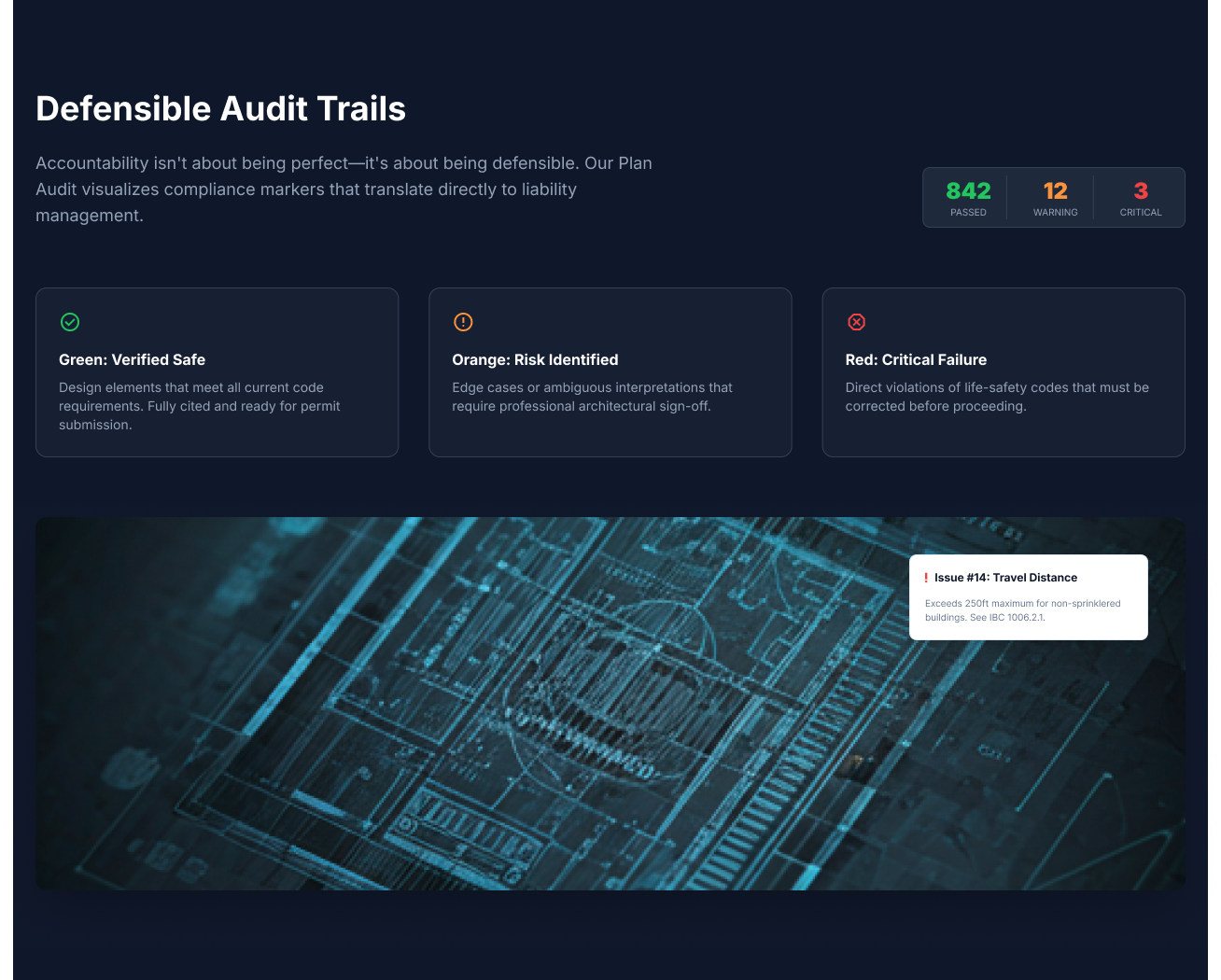
AI systems in construction are built to approximate. Buildings are not. When mistakes slip through, they don’t stay abstract—they turn into rework, delays, and real cost. This piece explores why probabilistic AI falls short in the built world, and why any system that hopes to be trusted needs to be deterministic, traceable, and defensible.
