☰


By Russell Goldman, Founder of Buildable Engine
Every physical thing, whether the tiniest of widgets to the largest of buildings, starts as a design. An idea becomes a concept. A concept becomes a drawing. A drawing becomes the governing document for everything that follows. Somewhere between that design and the finished structure, something almost always goes wrong that delays the building of that object.
In most cases, what goes wrong is not catastrophic. But issues and rework (e.g. dimensions that don't add up, code requirements that were missed or conditions on one drawing that conflict with what another drawing shows) have become expected hurdles in the path of any designer, innovator or builder. In Construction, these issues are so common that the industry has built an entire professional language around managing their consequences: RFIs, change orders, contingency budgets, schedule float etc.
We built Buildable Engine because we think it's time for something better.
We call it Buildability Intelligence™ , and it's the foundational concept behind everything Buildable Engine does.
Buildability Intelligence is the systematic capacity to evaluate whether a concept or designed object can be constructed as specified, at the point of design, before construction begins. It is an intelligence layer: a body of analytical knowledge that sits between intent and execution and answers the question every developer, architect, contractor, builder and lender is always asking: can this actually be built?
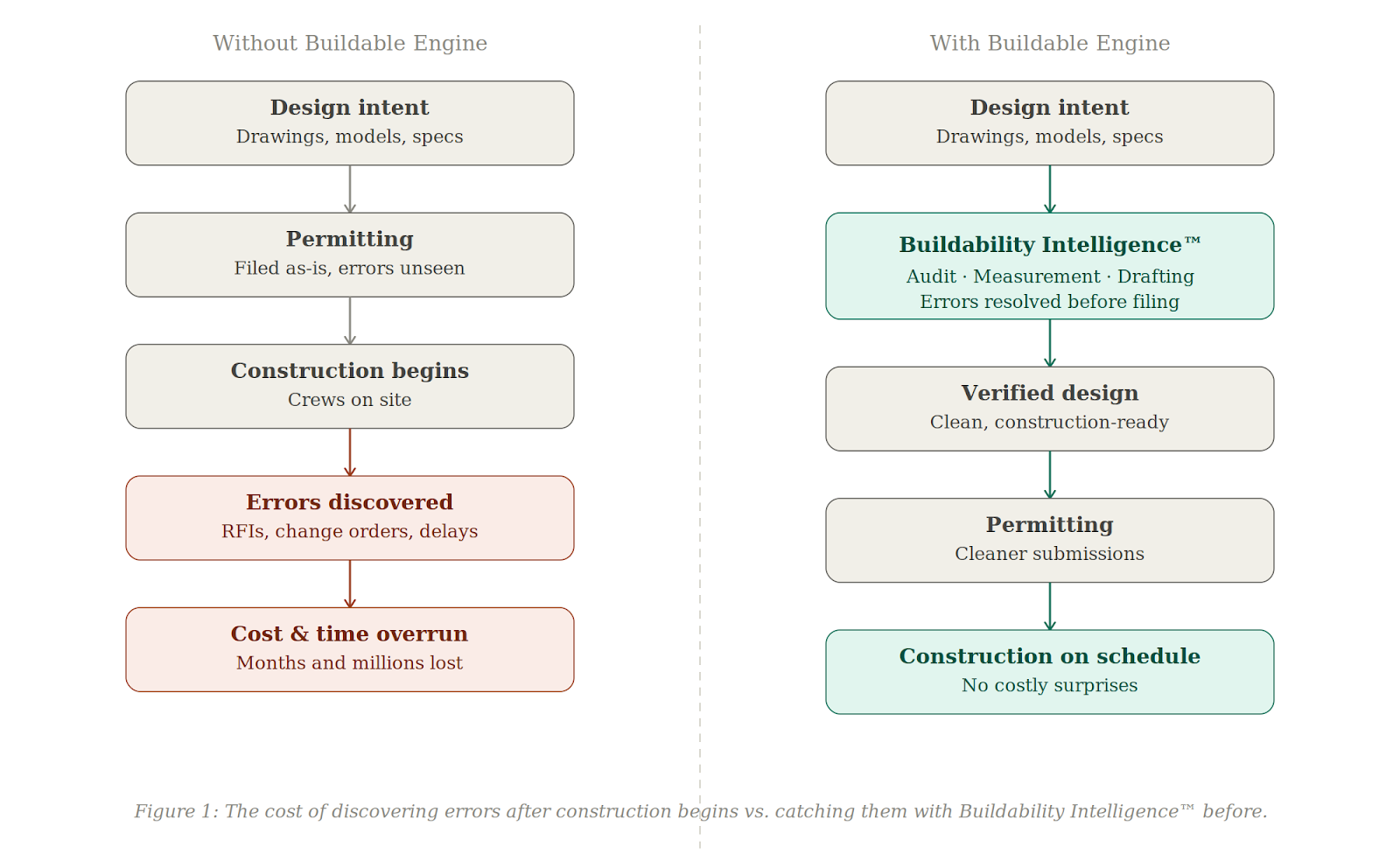
Figure 1: The cost of discovering errors after construction begins vs. catching them with Buildability Intelligence™ before.
While current processes (both human and machine-led) rely on drawing review, buildability intelligence offers something fundamentally different. The process of reviewing is a task or series of tasks with the goal of marking and alerting stakeholders of errors. Intelligence on the other hand, is a capability.
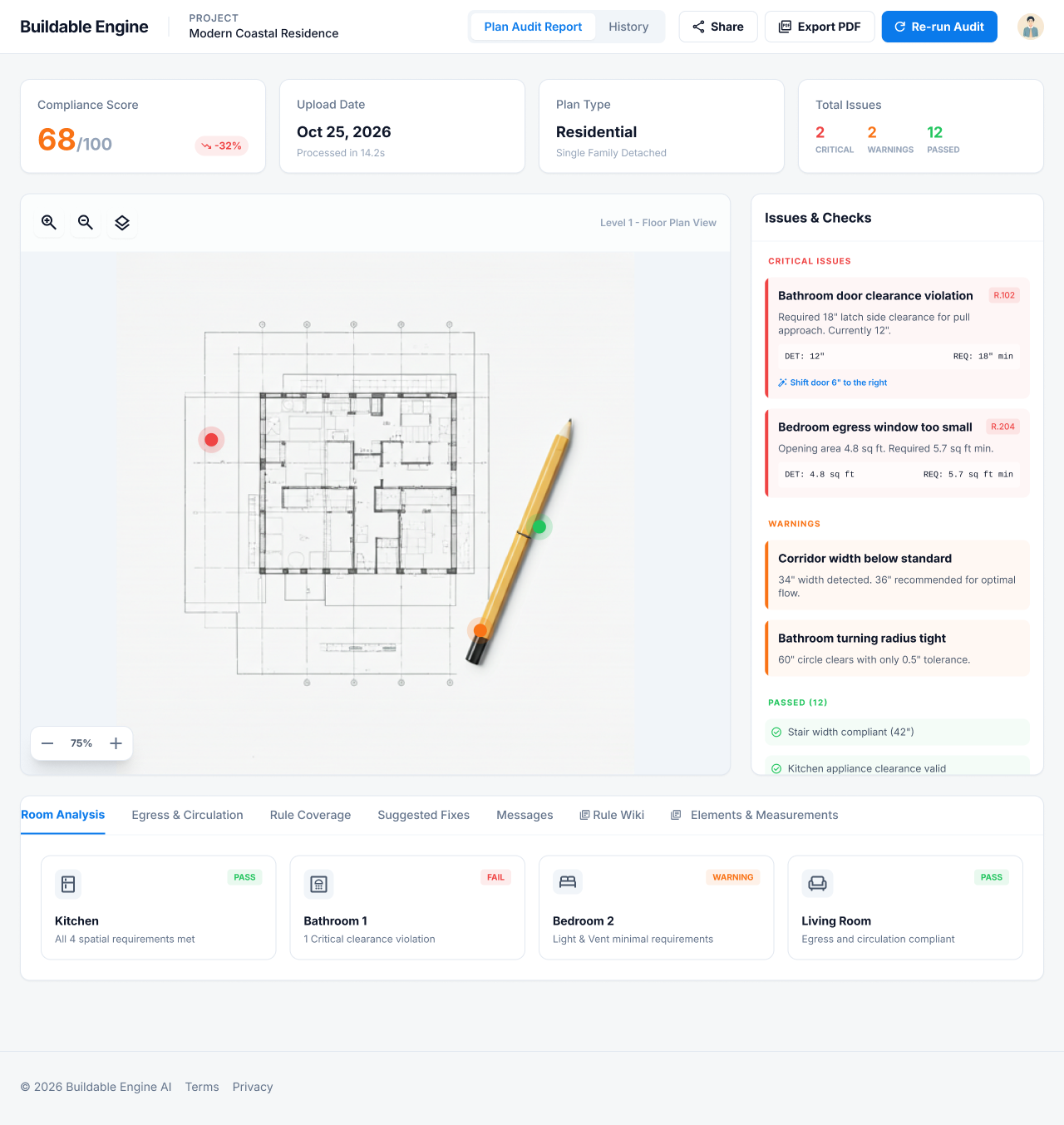
Buildability Intelligence is a systematic, AI-powered analytical layer that understands the geometry and spatial relationships between every element in a design document and is capable of evaluating drafted documents against a set of constraints. It can surface conflicts and code violations, as well as undesirable, sub-optimal or simply unbuildable conditions across entire sets of documents in seconds. Unlike generative AI, which produces outputs evaluated by likelihood, Buildability Intelligence produces determinations—answers derived from actual measurements, geometric calculations, and defined requirements. The outputs are not suggestions or possible mistakes; they are findings.
Buildability Intelligence doesn't compete with BIM tools, project management platforms, or permitting software. Rather, it sits underneath all of them as the foundational knowledge layer that every downstream decision depends on.
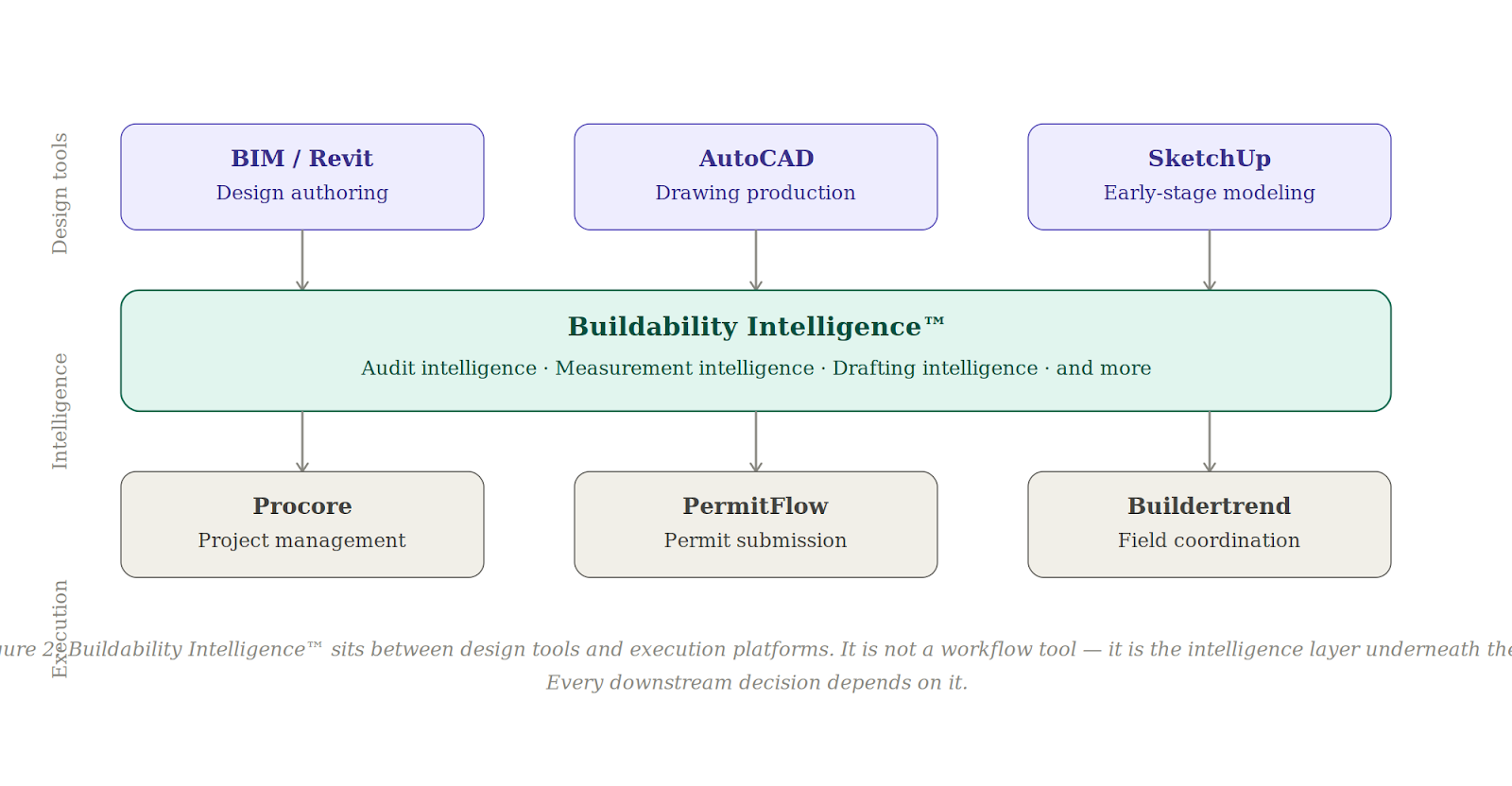
Figure 2: Buildability Intelligence™ sits between design tools and execution platforms — the intelligence layer that every downstream decision depends on.
The world has long understood that certain decisions cannot be made without the right intelligence layer beneath them. Capital cannot be allocated without financial intelligence. Loans cannot be underwritten without credit intelligence. Insurance cannot be priced without actuarial intelligence. Medical decisions cannot be made without clinical intelligence. In every high-stakes domain where decisions carry real consequence, the industry eventually built a systematic layer of knowledge to support them. Every domain, except one...
The world of design and construction has continued to approve, finance, permit, and build projects without any equivalent for the physical design itself. Structural analysis exists, but it addresses one constraint in isolation. Buildability Intelligence addresses all of them together: whether a design works spatially, regulatorily, structurally, and constructibly across every discipline, every sheet, every element and before a single permit is filed or a foundation is poured. It is the intelligence layer the industry never had. It finally exists.
Buildable Engine has architected an extensible intelligence platform for the entire industry, and we are launching with two intelligence modules.
Compliance Intelligence — deep, automated review of construction documentation against code requirements, spatial constraints, and constructibility standards. Errors are flagged, categorized, and prioritized before they reach permitting or the field.
Specification Intelligence — systematic evaluation of consistency between specifications and drawings. One of the most common and costly sources of field errors, finally caught at the source.
Drafting Intelligence — AI-assisted generation of drawing elements informed by Buildability Intelligence constraints. The first module to move from analysis into creation.
These are the first expressions of a platform. Because Buildability Intelligence is not a single product– it is a category of applied AI that can be delivered across the entire pre-construction and construction value chain (drafting intelligence, specification intelligence, diligence intelligence)–the spatial reasoning engine that powers Buildable Engine (patent pending) is capable of far more than any single use case.
Buildability Intelligence is also fully customizable. Beyond evaluating designs against externally imposed requirements — building codes, zoning regulations, structural standards — the platform can be configured to evaluate against internal ones: firm standards, client preferences, proprietary workflows, and organizational benchmarks that define how a particular team works and what quality means to them. This means Buildability Intelligence doesn't just answer the industry's questions. It answers yours.
You don't have to change how you work to access it. Buildability Intelligence is available on the Buildable Engine platform — and equally available as an integration into the tools and workflows you already use.
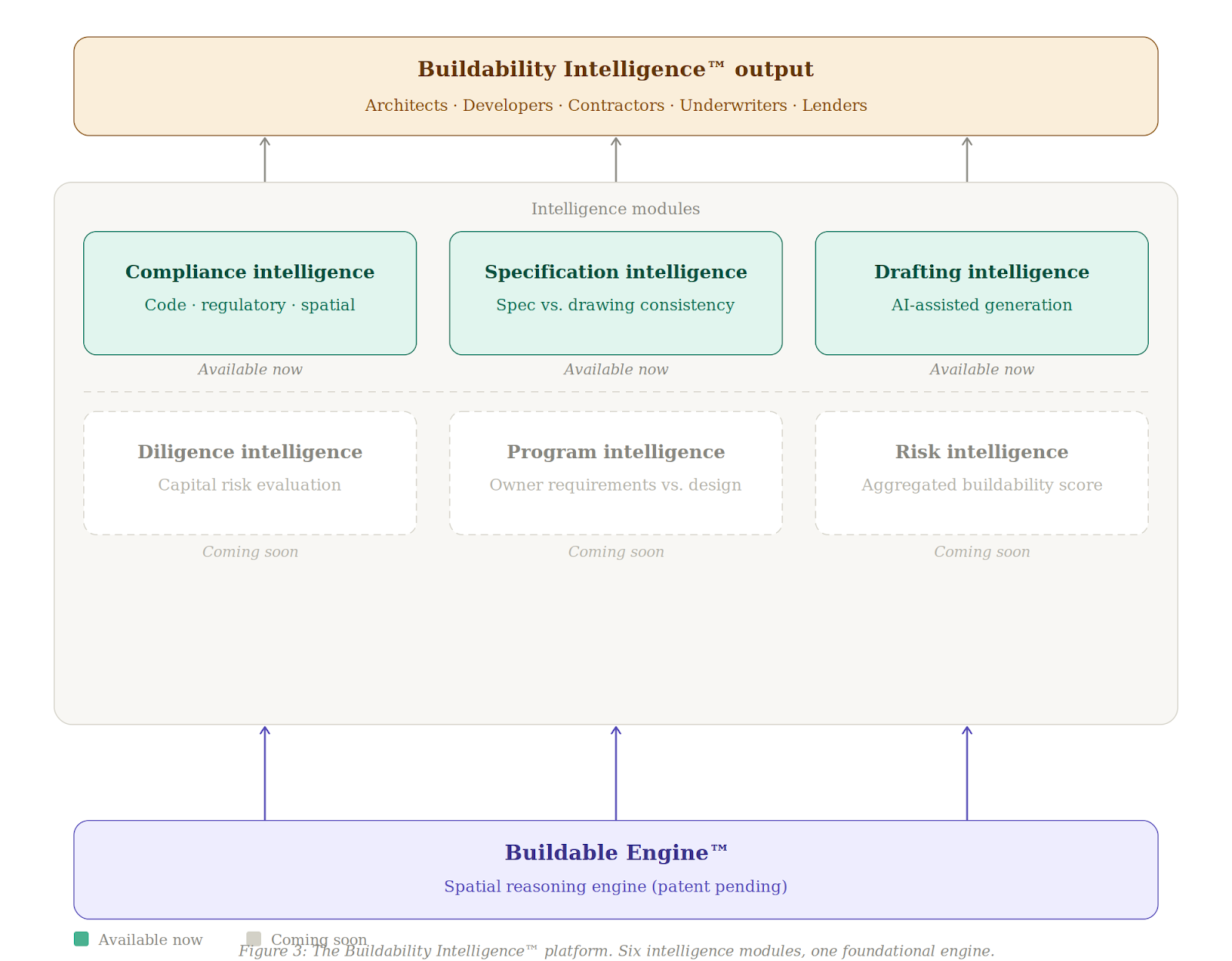
Figure 3: The Buildability Intelligence™ platform. Multiple intelligence services, one foundational engine.
Buildability Intelligence matters to anyone who bears risk in the gap between design and construction.
Architects and designers: a verification layer that catches errors before they become liability — protecting the design intent you worked to create.
Developers and owners: the ability to evaluate the constructibility of what you're building before you commit capital — the equivalent of a structural inspection, applied to the drawings themselves.
Contractors and builders: fewer surprises on site, fewer RFIs to manage, and fewer change orders to absorb.
Lenders and underwriters: a new class of information that has never existed as a data point before — a buildability signal on every deal you evaluate.
Municipalities and permitting authorities: a faster, more consistent basis for plan review — reducing the back-and-forth of incomplete or non-compliant submissions before they reach your desk.
Buildability Intelligence is not a feature. It is not a workflow improvement. It is a new category of applied intelligence for the physical world, one that has always been needed and that next generation technologies have finally made possible.
Buildable Engine built it. Buildability Intelligence™ is ours.
Buildability Intelligence™ and Buildable Engine™ are trademarks of Buildable Engine. All rights reserved.
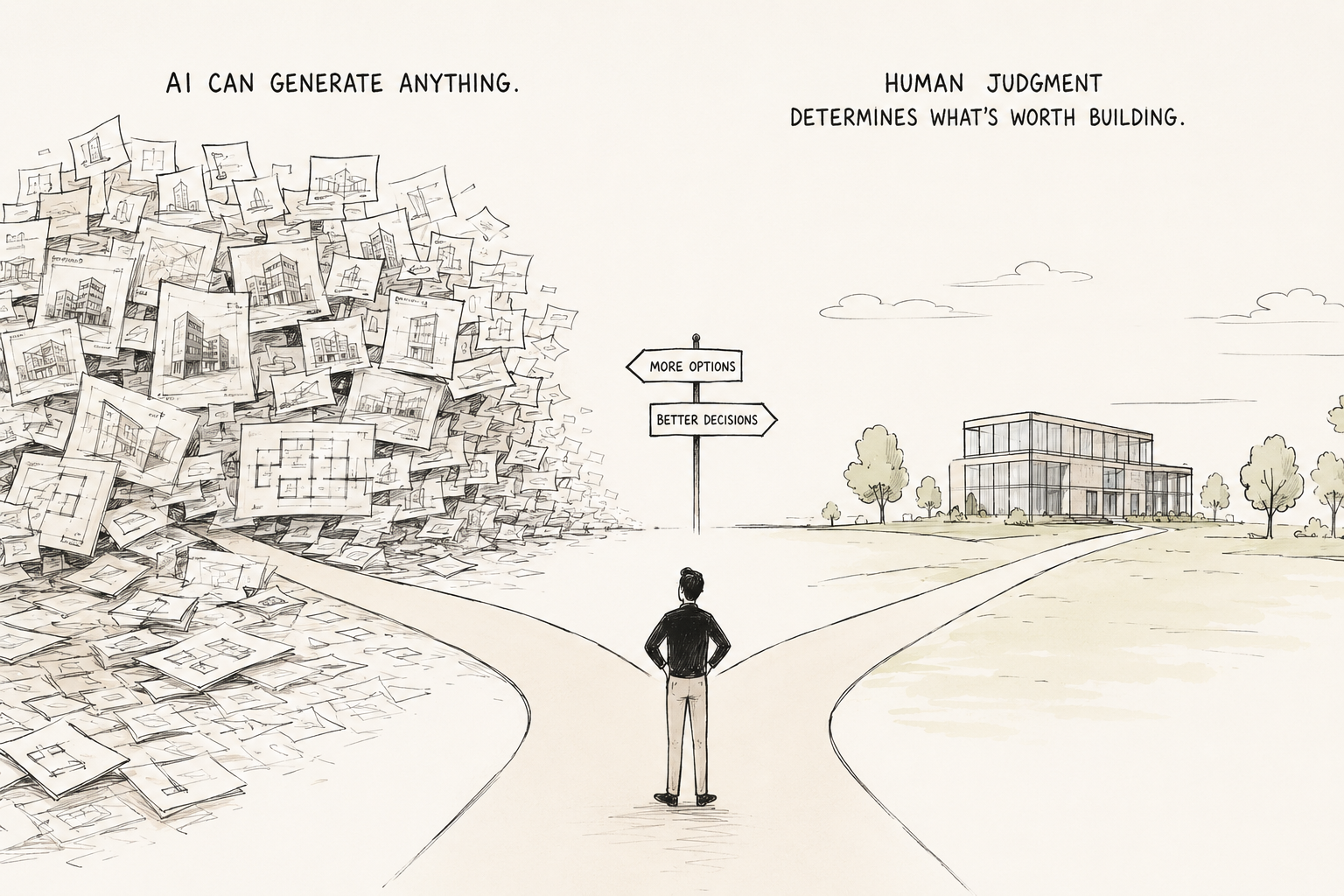
As AI makes it nearly effortless to generate endless possibilities, the harder problem becomes deciding what actually works. The next frontier of AI may be systems that can evaluate, optimize, and navigate complexity—while leaving humans to define what “better” means.