Buildings accumulate disconnected representations of themselves from the moment design begins — drawings, models, specifications, and field records that were never designed to stay in sync — and most of the built environment is operated, maintained, and traded against information that stopped matching physical reality the day construction began. The industry has built an entire economy of workflows to manage that drift, and the next significant shift in construction software is treating it as an infrastructure problem rather than a documentation one.

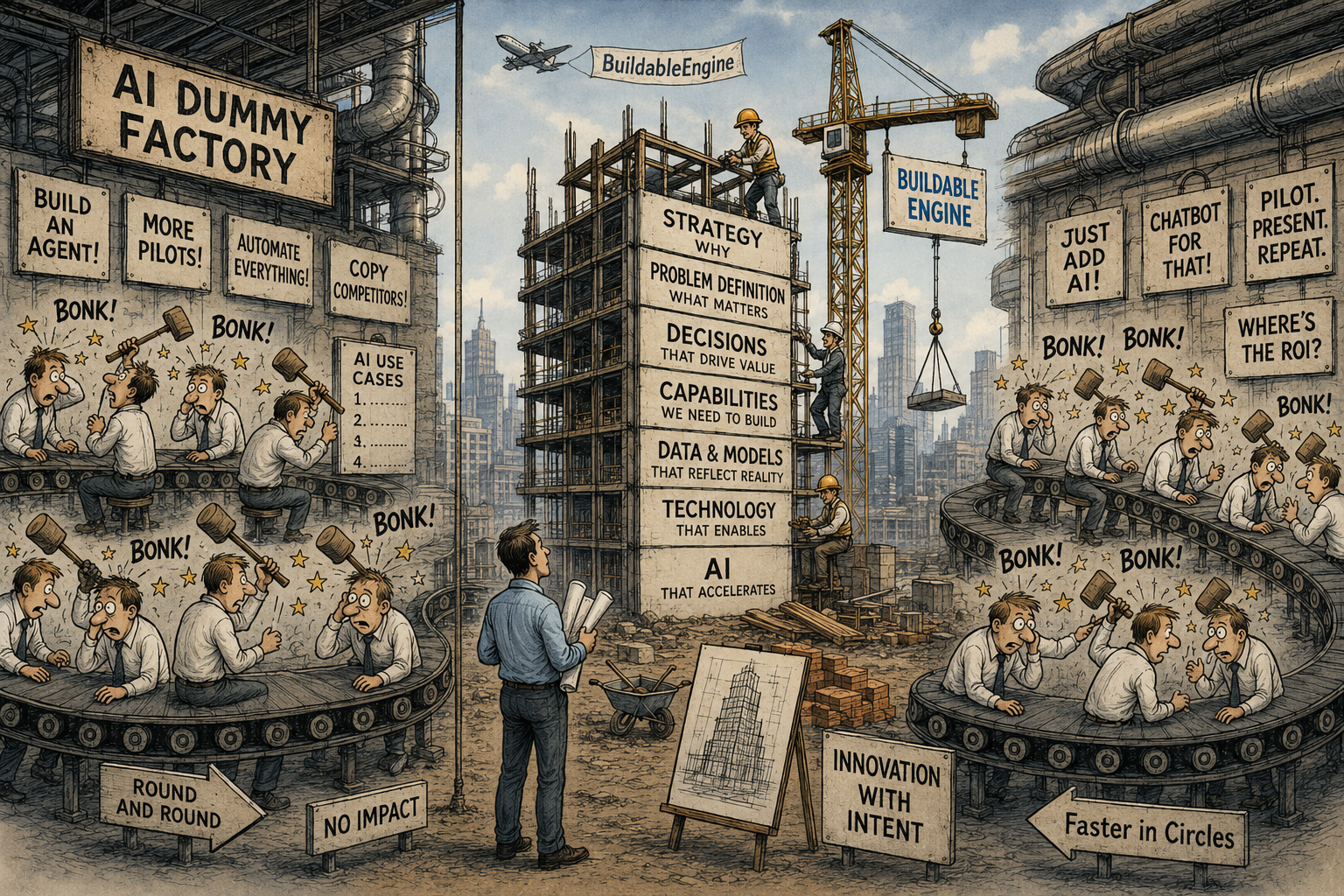
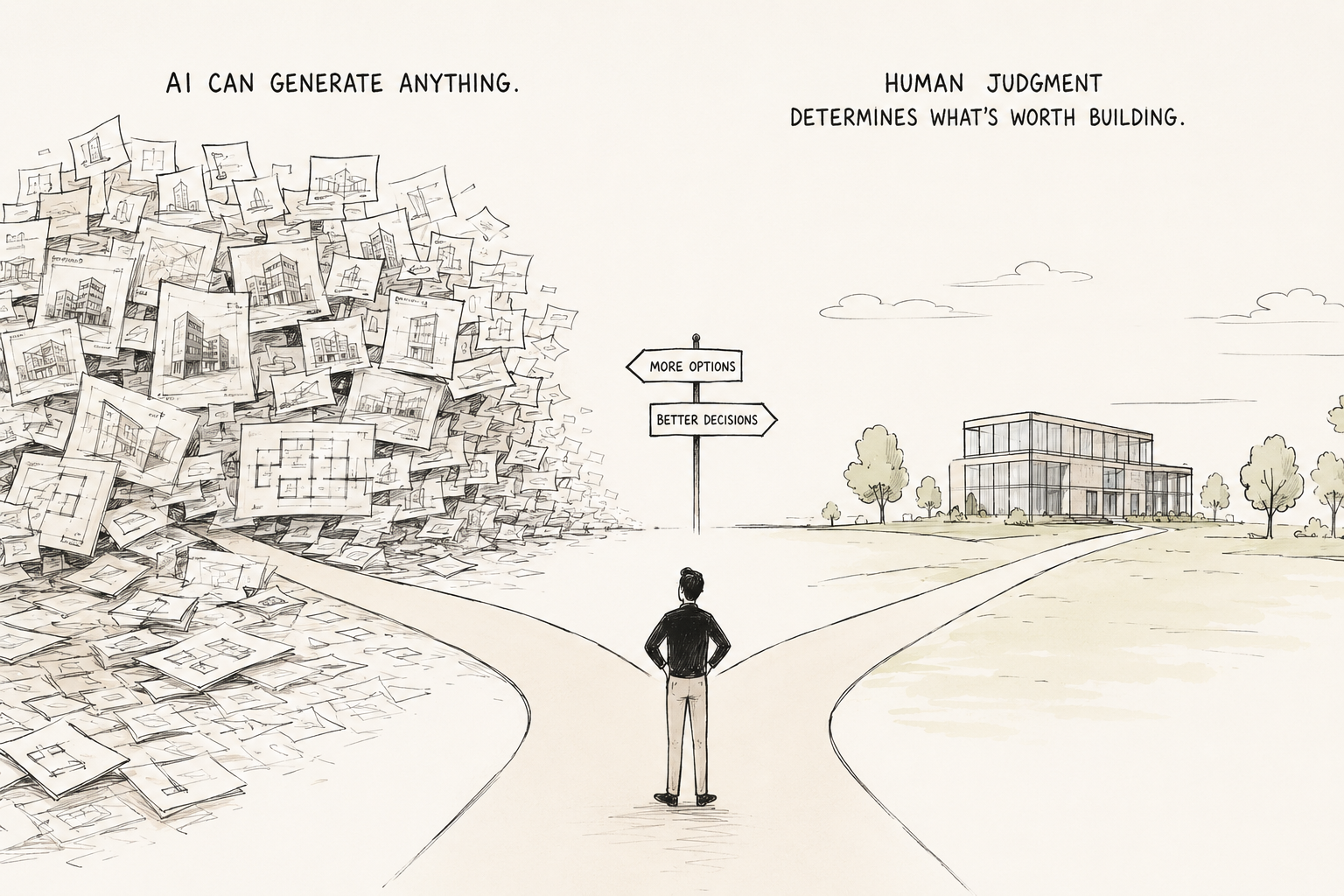
An important but underappreciated distinction exists between probabilistic AI (large language models that generate plausible outputs) and deterministic AI (systems that encode explicit rules and produce auditable findings) — and the construction, architecture, and engineering industries are deploying the wrong one at scale, misallocating both talent and capital in the process. The problem is now becoming structural: the largest AI labs in the world are embedding their engineers directly inside the industries that need a fundamentally different kind of AI, locking in the wrong infrastructure before the market has learned to tell the difference.

AI software costs scale in ways most construction firms haven't modeled yet. The tools doing plan review and compliance checks are mostly LLM-based, which means unpredictable costs and accuracy you can't audit. Buildable Engine is built differently: deterministic logic where it matters and "AI" only where it adds value.