☰



Introducing what Buildable Engine actually does — and what it means for people who design and build.
For the past several weeks, we've written about Buildability Intelligence as a category — what it is, why AI alone doesn't work in construction, and why determinism is the standard the industry has always needed but never had.
Most compliance review happens too late. By the time errors are found, designs are already set, budgets are committed, and rework is expensive. The industry has accepted this as a cost of doing business for decades. We decided not to.
The architects, designers, and builders who come to Buildable Engine are not looking for another tool that surfaces problems they already know exist. They're looking for confidence and defensibility. Our users want the ability to submit a plan, move toward permitting, and stand behind their work without waiting for someone downstream to tell them what went wrong. They want to catch it first. They want to know before it becomes a field problem, a change order, or a conversation no one wants to have.
That's what we built for.

Getting started literally takes seconds. Name your project, select a category ( residential, commercial or Mixed Use)and upload your architectural drawings. Buildable Engine accepts the formats your team already works in: DXF, DWG, PNG, JPG, JPEG. If you have older plan images that were never drawn digitally, you can upload those too.

Then you start the audit.
The engine gets to work immediately. In the background, it's extracting spatial data, parsing architectural elements, converting them into our proprietary data model structure and running compliance checks in real time. You can watch it work, but within seconds, it's done.
Here's where it gets powerful.
The first thing you see is your compliance score — a single, clear number that tells you exactly where your design stands before a single wall goes up. In the example we ran for this post, a residential floor plan came back at 44/100. Five critical violations. Zero warnings. Eleven checks passed.

Every critical finding is tied directly to the rule that triggered it. Not a vague flag. Not a suggestion to "review this area." Specific code citations: IBC 1401.1. IRC R310.1. IBC 1006.1. IBC 1001.1. You know exactly what's wrong and exactly why — and the floor plan itself highlights the precise location of each violation so there's no ambiguity about where to look.
In the traditional workflow, architectural plan review takes 3 to 4 weeks–and that's after the design team has already spent days manually checking compliance before submission. Buildable Engine returns a full compliance audit in roughly 14 seconds for a standard residential plan. While human Architects should always have the last word, imagine the efficiency gains when Buildable Engine and Architects can work together.
The compliance score is only as meaningful as the rules behind it. This is where Buildable Engine is fundamentally different from every other tool that has tried to apply AI to construction.
Every audit runs on a fully configurable rule engine. Our engine is organized by system rules, jurisdictional codes, and configurable standards. You can see every rule that is active on your project, what it checks, what code it references, and whether it is mandatory or adjustable. Rules like Continuous Path to Legal Exit (IBC 1006.1), Door and Window Wall Placement (IBC 1401.1), and Egress Window Opening Requirement (IRC R310.1) are not approximations of what the code says. They are the code, encoded and enforced. What's more, users and firms can even create rules of their own to enforce their own design standards or to reflect in-market knowledge related to what's actually permissible by regulatory bodies or clients.

This matters for a reason we've written about before: in construction, you don't just need to be right. You need to be defensible. Against a jurisdiction. Against a consultant. Against the person who signs off. Buildable Engine produces outputs you can stand behind.
Finding violations is only half of it. For issues within scope, Buildable Engine surfaces specific, code-grounded paths forward — changes that would bring the design into alignment with the rule that flagged it. Every suggestion is tied to the same cited standard as the audit itself. The tool has the ability to identify better circulation pathways and can even insert hallways or doors on its own to make those pathways reality.
But the design decision always stays with the architect. Review the suggestion. Apply it if it fits. Take a different approach if it doesn't. Buildable Engine informs the call — it does not make it.
You can also make changes directly within the platform. Add doors, reposition windows, adjust placements — all without leaving the tool. Every change, whether AI-suggested or manually made, feeds back into the compliance model immediately. The score updates. The issue count changes. You see the impact in real time.
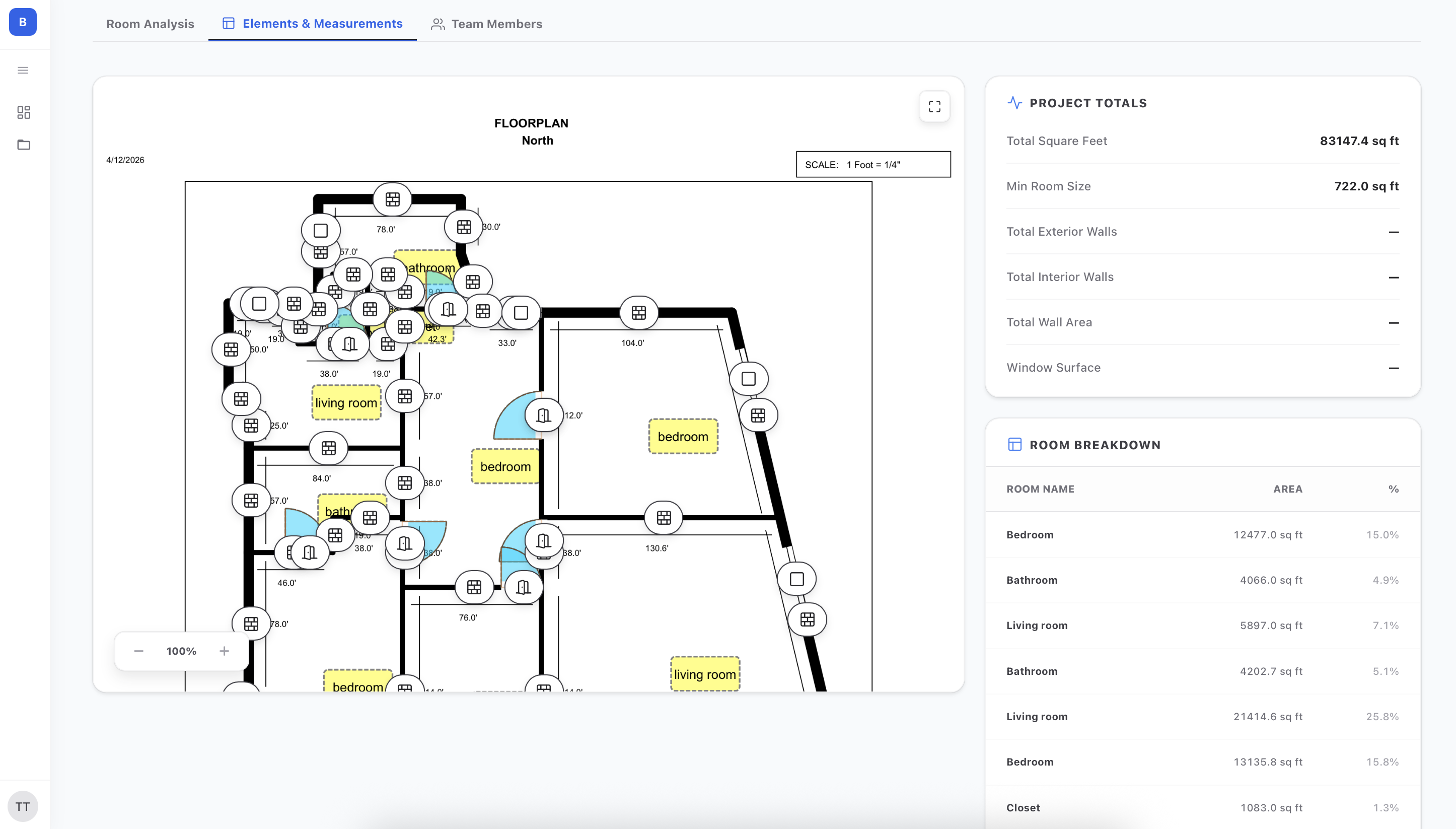
Beyond compliance, Buildable Engine extracts the spatial data embedded in your drawings. The Elements & Measurements view gives you total square footage, minimum room size, room-by-room breakdown with area percentages — structured data your team can actually use, not just a PDF with highlights on it.
Invite your team to review findings, share progress, and stay aligned — without anyone working from a stale copy. Active members have immediate access to view or edit the project. Pending invitations grant access once accepted. No version confusion. No emailing PDFs back and forth.
When the work is done, export it back into your workflow in whatever format you need — image, CAD, or otherwise.
A drawing goes in. Buildable Engine parses it, scores it, flags every violation with a code citation, pinpoints each one on the plan, suggests compliant fixes, lets you make changes in real time, and exports a design you can stand behind.
That is Buildability Intelligence in practice. Not a concept. Not a category. A working product — available now.
Start your free Trial Today with BuildableEngine.com
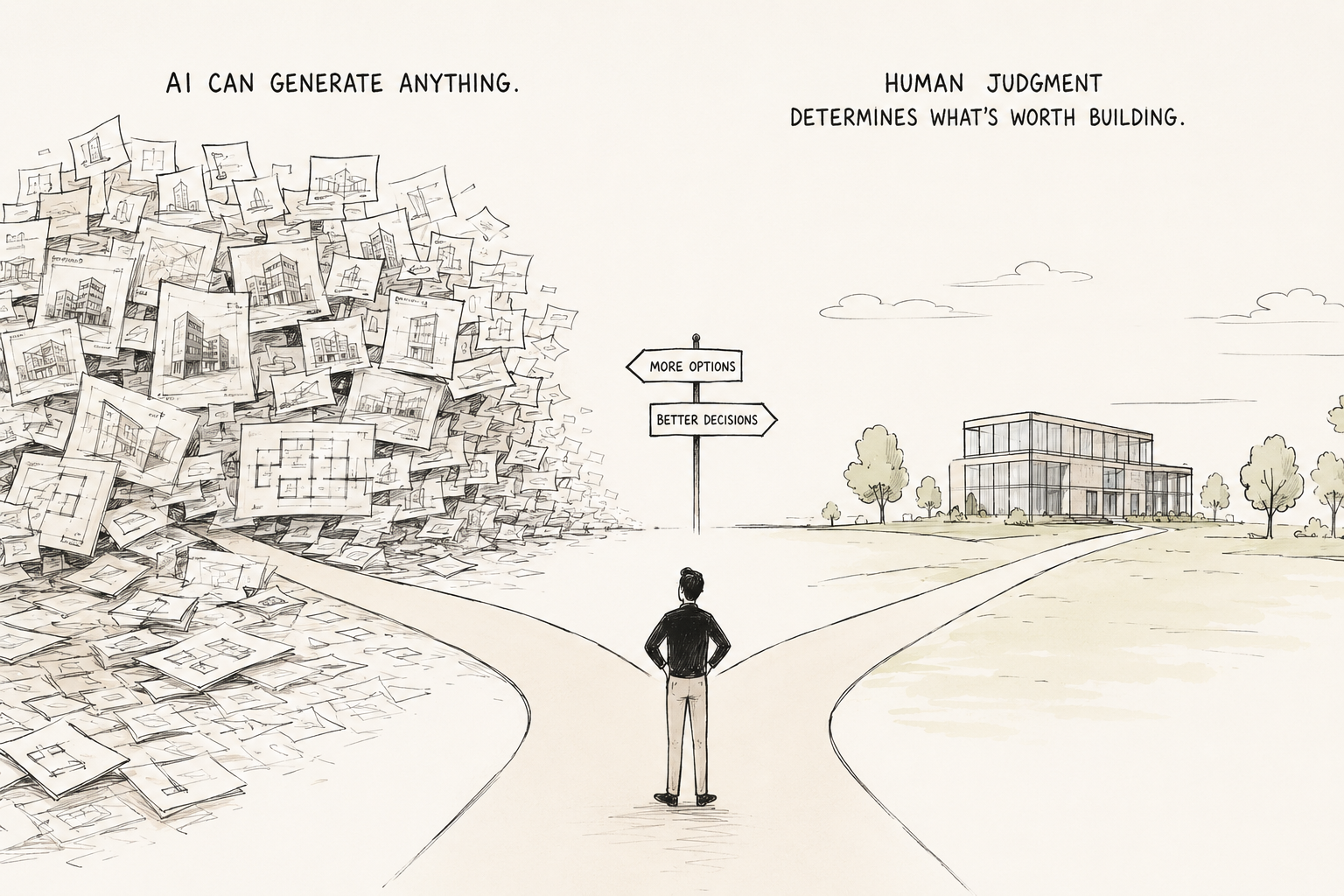
As AI makes it nearly effortless to generate endless possibilities, the harder problem becomes deciding what actually works. The next frontier of AI may be systems that can evaluate, optimize, and navigate complexity—while leaving humans to define what “better” means.